
Analysis: Repeat Xmas ads top consumer testing
December 1, 2025

Repeat adverts have triumphed this Christmas with five of the top ten performing TV spots in the UK reusing previous ads, consumer testing by Kantar shows.
Cadbury’s Secret Santa was the most effective ad overall followed by Coca-Cola’s Holidays are Coming, with both advertisers rerunning previous content. Just as Coca-Cola’s famous campaign has become synonymous with the festive season, Cadbury has begun to establish its own Christmas ritual built around its Quaker roots. The two ads sit in the upper 100th percentile of Kantar’s advertising database for powerful branding.
Other strong performers included Aldi, which continued the adventures of Kevin the Carrot and M&S Food, which brought back its Fairy character. Asda was the only brand to break into the top 10 with an entirely new idea in its Grinchmas TV ad, borrowing fame from the popular children’s tale and proving that even the hardest of hearts can be melted with the right spark of inspiration.
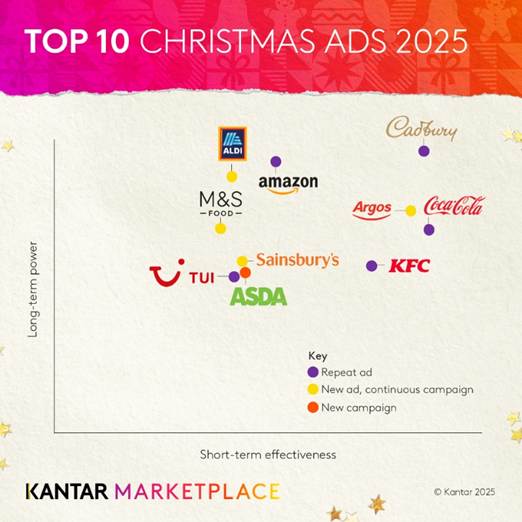 Kantar researched the public’s response to television adverts from retailers and consumer businesses, comparing performance against its advertising database of over 200,000 ads.
Lynne Deason, head of creative excellence at Kantar, commented: “In a cluttered season, brands reusing and evolving familiar assets are cutting through more effectively than those starting from scratch. That’s not lazy, it’s smart marketing. Our brains forget things easily and in today’s busy world, brands have to keep drumming into people’s minds what makes them different in a way that’s memorable and meaningful to cut through.
“Effective advertising takes more than simple repetition. Brands need a clear, core idea, rooted in their strategy, that can be refreshed and adapted to trends and consumer realities. And that idea works most powerfully when it comes to life across every interaction with consumers, from advertising to the in-store experience, online shopping and apps, and even how staff come across. It’s about getting to the point where the idea is so distinctive that it’s instantly recognisable as being for the brand featured. We know that brands which maintain a cohesive image and messaging, which sets them apart from their competitors, ultimately grow better in the long run,” Deason added.
Television still dominates the Christmas advertising season, but the role of non-TV channels in driving campaign awareness has grown this year as audiences fragment. One in four consumers said they were looking forward to watching ads on YouTube and 18 per cent on TikTok, with John Lewis the most talked about ad on the latter platform. The press is having a renaissance too as its advertising cut through for grocery brands has doubled in the past three years.
Deason continued: “While television is still incredibly important for landing a central idea and making it famous, non-traditional media formats are doing more of the heavy lifting in terms of magnifying and extending the impact of campaigns. That means having a consistent, recognisable creative idea that’s intrinsically connected to your brand is more important than ever for advertisers to ensure things join up across this long tail of media outlets. Kantar data shows the contribution of campaign synergy to overall success has doubled in recent years.”
Aldi delivered the laughs in 2025 with its second instalment of Kevin’s stag do crowned the funniest advert. Amazon is this year’s banger for music enjoyment with its instrumental cover of The Beatles’ song In My Life. Coca-Cola’s iconic Holidays are Coming jingle was hot on its heels. John Lewis, Lidl, Morrisons, Waitrose and Tesco’s TV ads didn’t make the top 10 in 2025. John Lewis’ Where Love Lives campaign kickstarted a public conversation about modern masculinity, but it is Cadbury’s Secret Santa which scored the highest with consumers for positive male portrayal.
Argos’ Thought we Were Just Toys also scored well for male portrayal as well as other metrics such as humour, storytelling and brand centricity to deliver its strongest Christmas ad yet. Amazon’s Joy Ride remains a powerhouse for showing women positively on screen – that’s despite Kantar finding that the proportion of all UK adverts depicting women in non-traditional roles has halved in 2025 versus last year. It is now just 4 per cent. This is a potential risk for advertisers going into 2026 as positive people portrayals help brands sell, driving a 3.5 per cent to 5 per cent uplift for short-term sales and boosting long-term sales by 16 per cent compared with less inclusive ads.
Deason concluded: “The ultimate test of effectiveness of course will be how well the campaigns translate commercially – at Christmas this year but beyond too. Retailers and brands will want to see short-term sales impact for their investment but it’s about long-term brand building too, shaping what people think and feel about brands and their predisposition to choose them now and in the long run too.”