
Forecast: Content creators to move beyond the smartphone
April 9, 2026
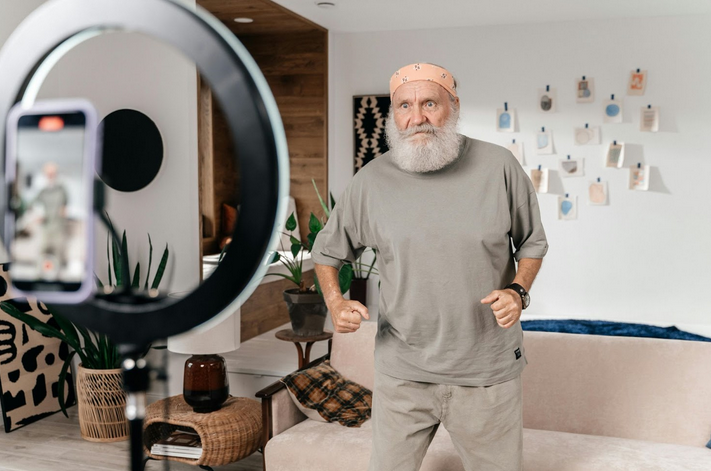
Research from Futuresource Consulting maps the global video creator population, their equipment decisions and the upgrade opportunity.
The global online video content creator population reached 246 million in 2025 and is on track to grow to 267 million by 2030. That’s according to Futuresource Consulting’s Online Video Content Creator report, but the headline population growth tells only part of the story. The more commercially significant finding is how creators are using their equipment, and what they are increasingly willing to spend.
The report is based on a nationally representative survey of more than 16,000 people across the eight major markets of the UK, the US, Germany, France, Spain, Brazil, China and India. It combines primary consumer research with detailed creator population sizing, five-year forecasts, device-level brand analysis, and creator profiles segmented by both content type and video acquisition device.
Smartphone dominates, but present upgrade opportunities
“Smartphones remain the primary video acquisition device for the vast majority of creators,” commented Helen Matthews, Senior Market Analyst at Futuresource Consulting. “But the number of users progressing towards dedicated hardware is growing at a significant rate. The closest dedicated alternative, vlogging cameras, falls far behind smartphones in our survey, underscoring how wide the gap remains, and how much runway exists for manufacturers to capture spend. And although smartphones present almost no barrier to entry for online content creation, they have physical limitations. As creators grow in ambition and production volume, the penalty for weak capture becomes more visible. That’s where the opportunity for dedicated camera products lies.”
The rise of dedicated equipment and new creator segments
According to the Futuresource research, of the 246 million video creators worldwide, a significant portion already own video accessories or dedicated hardware beyond a smartphone. Futuresource forecasts this group will grow at a CAGR of +4 per cent by 2030. Critically, nearly half of all online content creators report having considered purchasing new equipment in the past 12 months, providing a clear signal of near-term commercial intent.
The report identifies three distinct creator segments, namely hobbyists, aspirational and professionals, each with materially different equipment needs, spending behaviours and upgrade drivers.
Together, aspirational and professional creators occupy around 35 per cent of the total creator population in 2025, rising to approximately 38 per cent by 2030. These are the groups presenting the most immediate and sustained commercial opportunity for camera and accessory manufacturers.
AI accelerates content, but capture quality is king
Four in five creators surveyed now use artificial intelligence as part of their workflow. This is primarily for video editing, idea generation and visual effects, with AI functioning as a demand accelerator rather than a displacement force.
“As post-production becomes faster and more automated, the volume of content produced rises,” said Matthews. “As a result, the penalty for poor capture quality becomes more visible. We expect this dynamic to drive sustained demand for higher-specification cameras, audio equipment and accessories as creators who produce regularly seek to differentiate their output.”
Complex regional dynamics
India accounts for the largest share of the global creator population, at 28 per cent, and the strongest growth trajectory in the dedicated hardware segment. Meanwhile, the US has the highest equipment spending and the most established upgrade pathways.
China is navigating a more constrained environment, with regulatory and economic challenges moderating aspirational creator growth despite a large base.
Across Europe, there are divergent patterns between the UK, where creator culture is accelerating, and Germany and France, where market maturity and cultural scepticism around monetisation produce more measured dynamics.
Other posts by :
- Xona Space wants 259 LEO satellites
- 36 major airlines now committed to Starlink
- Quilty: Top 5 Washington Satellite show takeaways
- Space Wars: Starlink vs Amazon Leo
- Eutelsat seeks ISRO deal for launches
- Virgin Galactic sets prices for space tourists
- Devas vs Antrix rumbles on
- Shotwell makes TIME front cover
- Suitors eye Globalstar