
Why telecom growth is slowing despite 5G expansion
July 6, 2026
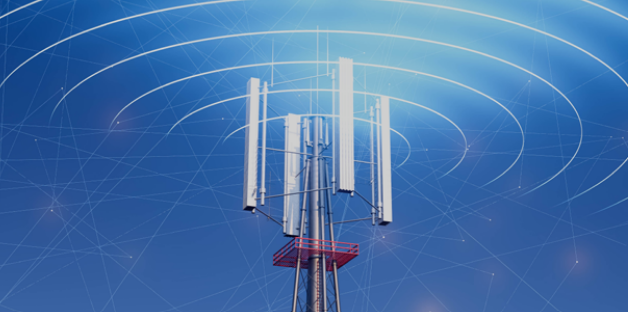
5G is growing at record speed, but telecom revenues are not. By 2025, global 5G connections reached billions, with nearly 70 per cent concentrated in Asia. That scale suggests a booming industry.
The reality looks different. Revenue growth sits at just 3–4 per cent annually. Usage is rising fast, but profits are not following.
5G Growth Is Real, But Financially Limited
5G has reshaped how people use digital platforms across the day. A single session now moves between Netflix or YouTube for video, TikTok or Instagram for short-form content, and Twitch for live streams. Many also switch to gaming on Xbox Cloud Gaming or NVIDIA GeForce Now, where real-time performance matters.
Online gambling platforms are also part of this shift. MrQ Casino is widely used for casino online games, offering verified software, instant deposits, and fast access across mobile, tablet, desktop, and app environments.
Users are no longer tied to one service. They move between streaming, social media, live content, and gaming without pauses. Sessions are longer, content quality is higher, and expectations are instant. There is no tolerance for buffering or delays.
5G enables this entire ecosystem. It supports 4K streaming, real-time gaming, and seamless switching between apps without performance drops. Multiple services can run simultaneously, which was difficult on older networks. As entertainment becomes more interactive and always-on, 5G moves from a technical upgrade to essential infrastructure behind modern digital usage.
Pricing Pressure And Falling ARPU
Average revenue per user (ARPU) has become one of the clearest indicators of telecom stagnation. While usage per subscriber continues to grow, spending remains flat. In saturated markets, operators compete aggressively on price to retain customers.
This pressure is intensified by low differentiation. Most providers offer similar speeds, similar coverage, and similar service bundles. Switching between operators has become easier, and customer loyalty is weak. Studies show that a large majority of users are willing to change providers for marginal savings.
As a result, telecom services increasingly resemble utilities. Pricing becomes standardised, and margins compress. Even as networks improve, operators struggle to convert technical upgrades into financial gains.
Market Saturation Is Capping Growth
In developed markets, telecom penetration is close to its natural limit. Smartphone adoption is nearly universal. Broadband access is widely established. Growth now depends on upgrades rather than new customers.
This shift changes the economics of the industry. Acquiring new users is no longer the primary driver. Instead, operators must extract more value from existing customers. That strategy is difficult when pricing pressure remains high.
Emerging markets still offer subscriber growth, but at lower revenue levels. A new user in a developing market generates significantly less income than one in a mature economy. This imbalance limits global revenue expansion even as total connections increase.
Rising Costs Are Squeezing Profitability
The cost side of telecom has become more challenging with 5G. Unlike previous generations, 5G requires a denser infrastructure footprint. More cell sites are needed to maintain performance, especially in urban areas. Spectrum costs have also increased significantly in many countries.
Beyond deployment, ongoing expenses continue to rise. Networks must be upgraded regularly to support new use cases. Energy consumption, maintenance, and operational complexity all add pressure. In many cases, cost growth outpaces revenue growth.
This creates a difficult equation. Operators invest heavily to stay competitive, but returns remain uncertain. The traditional model of scaling infrastructure to drive profit no longer works as effectively.
Value Is Shifting Outside Telecom
One of the most significant structural changes in the industry is the shift of value toward adjacent sectors. Cloud computing, artificial intelligence, and digital platforms are growing faster than telecom services. These areas capture higher margins and stronger investor interest.
Large technology companies dominate this layer. They monetise data, applications, and services that run on top of telecom networks. Meanwhile, operators provide the connectivity but capture a smaller share of the total value.
This dynamic reduces telecom’s strategic position. Instead of controlling the ecosystem, operators risk becoming infrastructure providers within a broader digital stack.
The Monetisation Challenge Remains Unresolved
5G was expected to unlock new revenue streams beyond consumer connectivity. Enterprise use cases such as industrial IoT, smart cities, and private networks were seen as major opportunities. Progress has been slower than anticipated.
Many of these applications require complex integration, long deployment cycles, and specialised expertise. Demand exists, but it develops gradually. At the same time, competition comes from cloud providers and system integrators, not just traditional telecom players.
On the consumer side, innovation has focused more on improving speed than creating new services. Faster streaming and gaming enhance user experience, but they do not fundamentally change spending behaviour.
The Shift Toward Enterprise And Digital Services
To address these challenges, telecom operators are shifting toward enterprise markets. Private 5G networks, cybersecurity services, and IoT platforms are becoming strategic priorities. These areas offer higher margins and more differentiated value.
However, execution remains complex. Operators must build new capabilities in software, analytics, and service delivery. Partnerships with cloud providers are often necessary, which can dilute control over the value chain.
The transition from connectivity provider to digital solutions partner is still in progress. Success depends on how effectively operators can reposition themselves within the broader technology ecosystem.
Other posts by :
- Analyst: Deep dive on Starlink’s prospects
- Musk: “AI is inevitable”
- Airbus Space says business is booming
- AST SpaceMobile gets permission for giant factory
- Questions over AST SpaceMobile’s spending plans
- Bank: AST SpaceMobile is favoured
- Amazon Leo gains South Africa link
- Eutelsat wants an extra 528 satellites
- FCC approves orbital space mirrors