
Blue Origin launch pad destroyed
June 1, 2026
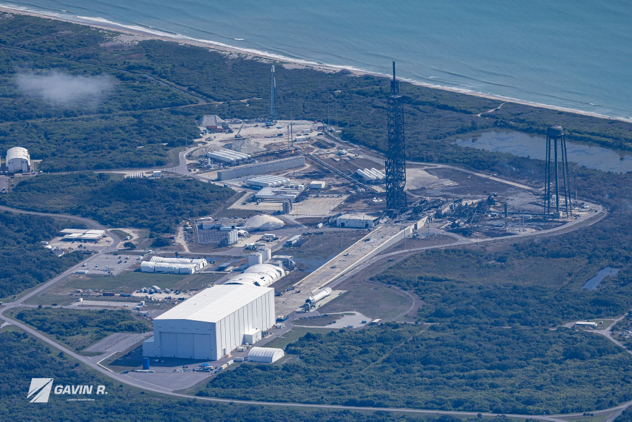
The explosion of Blue Origin’s New Glenn rocket on May 28th has caused extensive damaged to the launch pad which will set back future launches.
There was also a fear that nearby boosters, stored at Blue Origin’s integration facility at the Kennedy Space Center were damaged. But Dave Limp, Blue Origin’s CEO, said on May 30th that the company is actively investigating the hotfire anomaly, noting: “We will start clearing the pad soon and have a good rebuild plan in place. The booster and [second stage] GS2s in the integration facility appear healthy from quick looks.”
Nevertheless, the mishap, which occurred during a test fire of the engines for the New Glenn rocket’s launch ahead of a planned launch this week, comes at a critical time for Jeff Bezos’s business empire. His companies Blue Origin and Amazon are seeking to establish themselves as viable challengers in the heavy-lift and global satellite internet network industries, competing with Elon Musk’s SpaceX.
Blue Origin, as well as clearing the pad and analysing what went wrong, now has to face consequential delays to both elements of its business: Building rockets, and also launching the Amazon Leo satellites into orbit. Both are severely impacted.
Even the most optimistic observers suggest a six month delay in rebuilding the launch pad is probable. But it could be much longer. “It will take months to rebuild,” said Antoine Grenier, partner and head of space consulting at Analysys Mason.
Elon Musk’s SpaceX suffered similar damage at Kennedy back in 2016 when a Falcon-9 rocket exploded on the launch pad while testing its engines. A satellite, an Israeli Amos craft, was also destroyed. Nobody has ever carried out engine tests while carrying a satellite ever since.
Amazon LEO was relying on New Glenn’s rapid launch cadence to deploy half of its more than 3,200 satellite broadband constellation by July 2026 to meet regulatory deadlines. An extended grounding by the FAA will severely threaten the timeline.
Analysys Mason’s Grenier said Amazon has already tapped much of the near-term capacity available from other heavy launch providers. While SpaceX could absorb some additional demand, its Falcon 9 rocket can carry roughly half as many Amazon LEO satellites per launch as New Glenn, meaning any major shift of launches could require a significant increase in mission count, he said.
Also at risk is NASA’s Lunar ambitions. After the Blue Origin rocket explosion, NASA’s entire moon exploration program likely now depends on SpaceX. NASA is planning to send astronauts to the Moon in 2028.
However, Elon Musk is also suffering launch pad problems caused by the launch last week of its giant Starship. Reportedly the adjacent concrete structures were damaged after test flight #12. One observer said that despite extensive upgrades since earlier test flights the launch pad is still not strong or robust enough to cope with Starship’s immense power at lift-off.
Other posts by :
- Airbus Space says business is booming
- AST SpaceMobile gets permission for giant factory
- Questions over AST SpaceMobile’s spending plans
- Bank: AST SpaceMobile is favoured
- Amazon Leo gains South Africa link
- Eutelsat wants an extra 528 satellites
- FCC approves orbital space mirrors
- Analysts: “Unknown Unknowns for SpaceX”
- Ligado’s bankruptcy clean-up continues