
Research: Creator community driving studio equipment demand
February 9, 2026
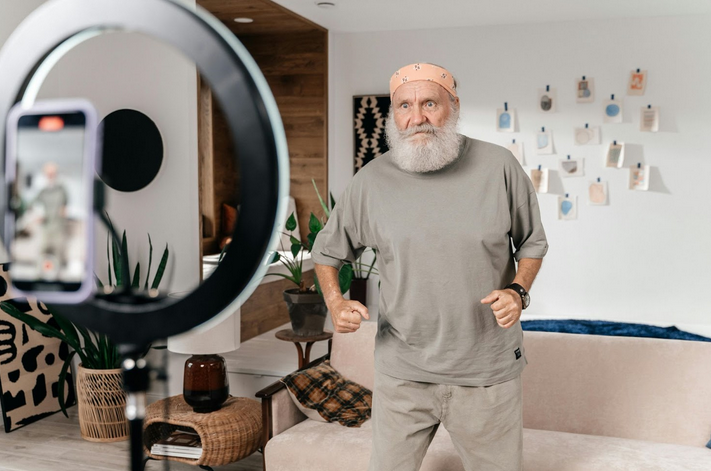
Research from Futuresource Consulting reveals that home studio content creation is maintaining its mainstream behaviour, shaping demand across audio and production technology markets.
The firm estimates the home studio market captured 55.3 per cent of total studio and broadcast revenues in 2025, reflecting a structural shift rather than a temporary pandemic distortion. Based on a nationally representative survey of more than 16,000 consumers across eight major markets, the report also shows a creator economy that is deepening in commitment and willing to invest.
According to the study, 53 per cent of respondents now qualify as content creators, with incidence highest in China (81 per cent) and India (79 per cent), and strong participation also evident in Brazil (58 per cent). While overall participation growth has levelled compared with the pandemic surge, the proportion of creators investing in dedicated production equipment remains resilient, pointing to a shift from expansion to professionalisation.
“What’s changing is not so much the number of people who create, but the seriousness with which they approach creativity,” commented Paul Wylie, Audio Analyst at Futuresource Consulting. “We’re now entering a more mature phase, where creators are increasingly treating production quality, consistency and workflow efficiency as essential.”
The new hybrid, video-led creator landscape
The research highlights that modern creators are rarely single-format specialists. 63 per cent of creators sit in a hybrid audio-and-video profile, with social video dominating output. More than half produce social media video content, reinforcing video as the default format even where audio equipment spend is rising. Smartphones remain central to creation workflows, underlining the importance of mobile-first production ecosystems.
At the same time, the pipeline remains strong. Among non-creators, 35 per cent say they intend to start at least one content creation activity in the next 12 months, suggesting continued renewal even as churn among more casual creators persists.
Monetisation raises the quality bar
Monetisation is becoming more widespread as well, though uneven by region. Over half of creators surveyed report earning income from their content, with significantly higher monetisation rates in China, India and Brazil than in Western Europe.
As income enters the equation, equipment spend shifts from hobbyist choice to business decision, and this is particularly evident in audio. Editing, distribution and AI-assisted workflows reduce friction, which means capture quality is reasserting itself as a key differentiator. Creators moving into longer-form video, live streaming and podcasts face a higher penalty for weak audio, accelerating upgrades into microphones, wireless systems and simple interfaces.
“A growing middle tier of creators is earning enough to justify investment,” said Wylie, “and that’s where much of the sustained equipment demand is now coming from. We’re seeing headphones as the strongest-performing category, because they fit hybrid, space-constrained workflows, while monitors remain a later-stage trade-up with long-term upside as creators mature and immersive workflows expand.”
A studio market in flux
Home studio demand is outpacing professional applications, and will account for 56.6 per cent of worldwide studio and broadcast market value by 2029, reinforcing its position as the market’s primary growth engine. Over the same period, the home studio segment is expected to grow at a 4.6 per cent CAGR, compared with 3.2 per cent for professional studio and broadcast, where expansion remains more selective and investment-led.
This reflects a market that is redistributing value. Professional studios and broadcasters continue to invest, but growth is increasingly concentrated in specific applications and higher-value upgrades, while the expanding home studio base drives scale, volume and long-term momentum. As a result, for vendors and platform partners, success increasingly depends on understanding creator workflows, monetisation thresholds and cross-format behaviour.
Other posts by :