
Data: Smart TVs, ring cameras killing home wifi speeds
February 17, 2026

During February half term in the UK, household demand for WiFi is set to peak, with more than three quarters (77 per cent) of parents reporting their family’s time online increases during the school holidays. Experts at Uswitch, the comparison and switching service, are issuing a warning to families that connection issues during busy periods can be caused by the volume of unused devices left running in the background.
These ‘phantom devices’ stay connected to the internet even when they are not in use. They are frequently checking for updates or sending information back and forth to your router. For example, a video doorbell might be quietly uploading high-definition footage to the cloud, using up a large chunk of your WiFi capacity without anyone in the house even touching a button.
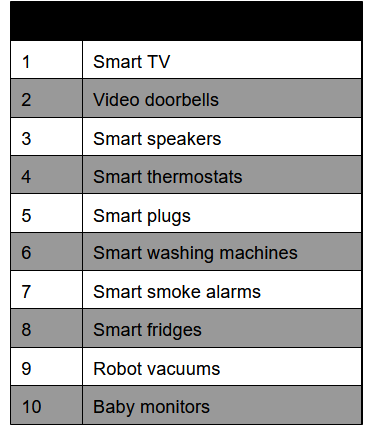
Data reveals the average household is now juggling 16 connected devices, with one in 10 even having 30 or more devices in their homes competing for bandwidth. More devices means more idle tech and the most common ‘phantoms’ found in UK homes include smart TVs (82 per cent), video doorbells (39 per cent), and smart speakers (39 per cent).
As the devices that are constantly ‘talking’ to your router or uploading content, these are secretly using up bandwidth without households realising. Over 20 million Brits (38 per cent) aren’t even aware that these devices can still slow down your WiFi when not in use.
Top 10 phantom devices that could be disrupting home broadband
Three in five (60 per cent) Brits have been frustrated with their WiFi speeds in the past three months, with the average house experiencing frustration with it once a week. Given that usage increases during school holidays amongst the majority of families with children, more frustration is to be expected this week.
While families are most likely to spend their half term using smart TVs (44 per cent), gaming consoles (40 per cent) and tablets (40 per cent), these activities are often fighting for space with ‘upload-heavy’ tech.
Gadgets like video doorbells (used by 39 per cent of consumers) and baby monitors (used by 11 per cent of consumers) are particularly disruptive because they constantly send large video files to the cloud. This hidden data use eats into the household’s bandwidth, leaving less room for streaming and gaming.
Max Beckett, Uswitch broadband expert, explained: “Unused gadgets and sensors are constantly talking to your router in the background, which can clog up your connection and cause frustrating buffering when you are trying to watch a movie or play a game. As half term sees a surge in demand across UK households, it is important to know that WiFi struggles are not just caused by too many people being online. Some devices take up bandwidth even when you haven’t touched them for days. Smart devices are becoming part of our daily lives, but it is easy to forget about old tablets, smart speakers, or smart plugs that are still plugged in and connected to your network.
“Take a moment this week to do a quick digital spring clean. If there is a device you no longer use, or an old piece of tech lying in a drawer that is still switched on, disconnect it from your WiFi or power it down completely. A full fibre broadband connection is the safest way to avoid buffering, but simple steps like managing your connected devices and limiting how many people stream high-definition video at the same time can make a huge difference,” added Beckett.
Other posts by :
- UK government blocks Orbex take-over
- Starlink: 10m customers and counting
- SES predicts end of ‘big’ Geo satellites
- Amazon Leo gets approval for 4,504 extra satellites
- SpaceX gets a portion of India
- TerreStar wants to build LEO network
- Musk: “No Starlink phone”
- Russia accused of eavesdropping on satellites
- FCC welcomes Musk’s 1m satellite plan