
Forecast: Streamers to mix up the media experience in 2026
December 5, 2025
Applause, a provider of crowdtesting and UX research that works with the likes of Netflix and Paramount+ and sports broadcasters, to provide quality assurance for a wide range of platform features, has shared its industry predictions for 2026 through Adrian Garcia, the company’s Senior Solutions Consultant.
Garcia’s three key predictions for the next 12 months are as followed:
- Streaming Agents Join the Cast in 2026
In 2026, we will see streaming services introduce their own ‘AI streaming agents’ designed to add greater personalisation to the viewing experience, suggests Garica. Providing recommendations based on user profiles, preferences and context, a personal streaming assistant or agent will drive user engagement, but it does carry risk.
Streaming agents need to be able to digest huge volumes of metadata to match the preferences and tastes of users, while anticipating what content the viewer wants to consume next, before directing them to that content. Domain-specific agents will also be reliant on more general-purpose AI models (e.g., ChatGPT, Claude or Gemini). There will be some instances where streaming platforms will develop their own specific AI models, but it’s more likely they will build agents using off-the-shelf versions, fine-tuning them to suit specific use cases. These challenges amount to streamers needing comprehensive testing and QA strategies that ensure these agents — and the models they’re based on — are tailored to provide personalized experiences. This approach will help ensure they are trustworthy and reliable, and capable of delivering a new type of service that will transform how we consume content.
- Streaming Platforms Mix Up the Media Experience in 2026
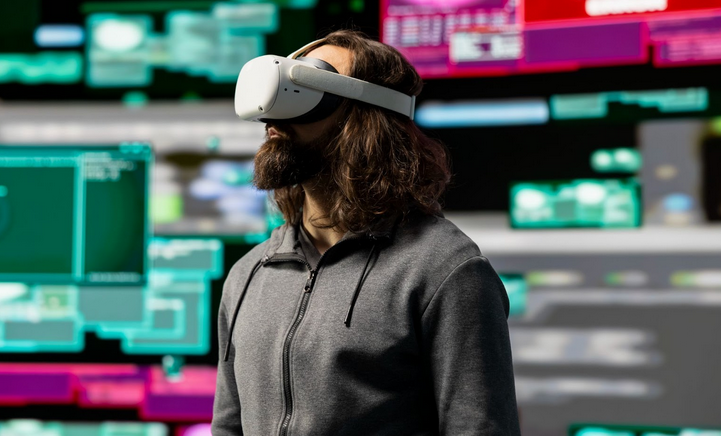
In 2026, we will see extended reality (XR) experiences play a bigger role in sports and entertainment, as streaming platforms and OEMs will collaborate to create a new generation of interactive media experiences., forecasts Garcia, Streaming platforms already offer mobile games, but via XR they will be able to offer new touchpoints that will transform the living room experience — blending streaming with gaming and other environments. New devices, virtual reality (VR) headsets and AI glasses are coming into the market that will add a new dimension to the living room experience through interactive and wearable-led services.
The more experiences providers can create, the more users they can acquire and retain. These users will be able to access streaming content, live sports with real-time stats and analysis, online gaming and more via new apps on their TV or mobile device. But, the challenge with VR, XR and other immersive experiences is continuity; delivering a seamless approach that isn’t disrupted every time users have to switch between devices or platforms. Context switching can derail everything — that’s where testing and quality assurance come in. Real-world testing with real users will allow streaming platforms and OEMs to connect the dots and deliver high-quality XR experiences.
- Risk of Security for Streaming AI Agents and Apps Increases in 2026
For many years, streaming devices have been susceptible to ‘jailbreaking’ — or the sideloading of apps that stream pirated content. In 2026, AI assistants and agents on streaming platforms will become another target of jailbreaking. AI models are still in a nascent phase, and some users will look to take advantage of any flaws or vulnerabilities by tricking them into providing false information or making changes in the system using prompt injection techniques or other security exploits. For example, a user could manipulate a chatbot or agent for a streaming service to renew a subscription or upgrade to new features without paying. Streaming platforms will start to lose money — and subscribers — unless they can find ways to prevent their AI models from being compromised.
The situation is very complex and exacerbated by agents communicating with other agents — responsible for functions like subscription management, all across the backend. However, checks and balances can be put in place to ensure that agents behave correctly. A key component of this is red teaming- or adversarial testing – that uses human testers to identify model risks and evaluates whether the actions an agent takes while engaging with users correspond with those that match its purpose and responsibilities. With red teaming, if an agent were compromised, it would be possible to trace it back to the source of the security flaw, before applying the necessary guardrails to prevent the issue from happening again, concluded Garcia.
Other posts by :
- FCC eyes freeing up Weird Space Stuff spectrum
- SES happy with releasing 160MHz of spectrum for 5G
- Inmarsat “likely to win appeal” over Ligado/AST action
- FCC seeks fair play over foreign satellite access
- Bank raises RocketLab target price
- Ukraine wants its own LEO system
- SpaceX outlines Starlink cellular delivery plan
- NAB vs CTIA on C-band release