
SES orders 28 MEO satellites
March 25, 2026
By Chris Forrester
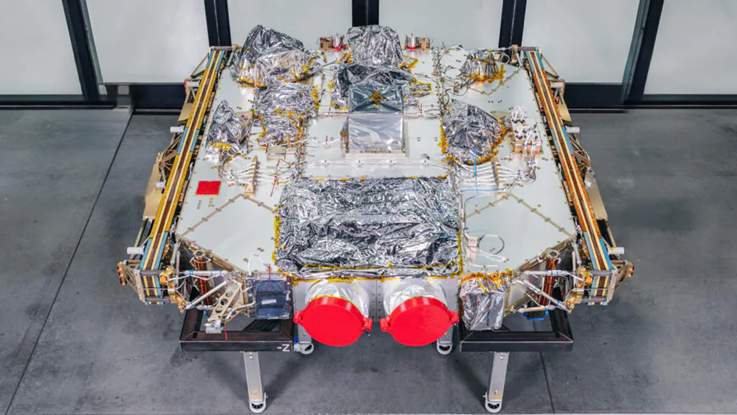
Luxembourg-based SES has ordered 28 ’next generation’ meoSphere satellites from LA-based K2 Space in what is perhaps the satellite industry’s largest ever for medium-Earth orbit (MEO) satellites.
The new fleet aims be operational by 2030 and will operate alongside the existing mPOWER satellites. An initial ‘pathfinder’ satellite will launch in the next few days as part of SpaceX’s next Transporter 16 mission. The first meoSphere satellites should launch in 2029.
Indeed, the order is a major indication of confidence for the future and recognition that there’s plenty of business ahead for MEO-based satellites. The K2 portion of each satellite costs about $15 million (€12.9m), but SES will provide the craft’s payloads.
SES CEO Adel Al-Saleh, speaking at the Washington DC Satellite 2026 show, said the company’s MEO fleet would eventually contain around 100 satellites.
The collaboration gives SES tighter control over key supply-chain elements, compresses the build timeline, and allows the company to manage schedules and costs with precision, laying the foundation for future scalability.
meoSphere is SES’s next generation MEO network, boosting global broadband capacity, increasing user data speeds while reducing terminal sizes and costs. These step-change improvements come from advances in payload and terminal technologies, software-defined networking, 5G non-terrestrial network (5G NTN) standards and MEO’s inherent strengths: efficient geographic coverage, ability to steer capacity to the high-demand areas, optimising ground-station deployment, and low latency.
The meoSphere network will be compatible with Europe’s IRIS2 programme, but this order will be supplemented by additional satellites for the IRIS2 system. The IRIS2 MEO project is expected to comprise 24 satellites.
It has also been reported that SES is to itself supply the payloads for the first generation of the European MEO satellites, and replacing Thales Alenia Space as the supplier.
Each of the new K2 satellite platforms will weigh about 2,200 kgs and potentially carry an additional 3,000 kgs of payload, including fuel.
Other posts by :
- Devas vs Antrix rumbles on
- Shotwell makes TIME front cover
- Suitors eye Globalstar
- SpaceX: IPO offer in days?
- Forecast: SpaceX tracking to $20bn revenue in 2026
- EchoStar’s Dish restructures debt obligations
- AsiaSat hits Zee and JioStar with legal actions
- Nvidia unveils orbital chip/computer for AI and data